DIGITAL PRODUCT · EDUCATION TECHNOLOGY · AI IN LEARNING
Explore how augmented reality and artificial intelligence can improve engagement, personalization, assessment, and inclusion in modern education.
By the Digital Product Team | Preiss Murphy | June 2026 | 8 min read
AR and AI in Education: Building Smarter, More Human Classrooms
The next major shift in education will not come from one technology. It will come from combining technologies around a clear learning purpose.
Artificial intelligence can help learning respond to each student. Augmented reality can bring abstract ideas into the learner’s physical environment. When both are designed into the curriculum and guided by teachers, they can create learning experiences that are more engaging, more accessible, and easier to improve with evidence.
The strongest model is not technology first. It is learning first. Schools need tools that support curiosity, critical thinking, collaboration, and measurable progress without reducing the teacher’s role or the student’s responsibility to think. This is where AR, AI, and thoughtful educational design become most powerful together.
What Do AR and AI Mean in Education?
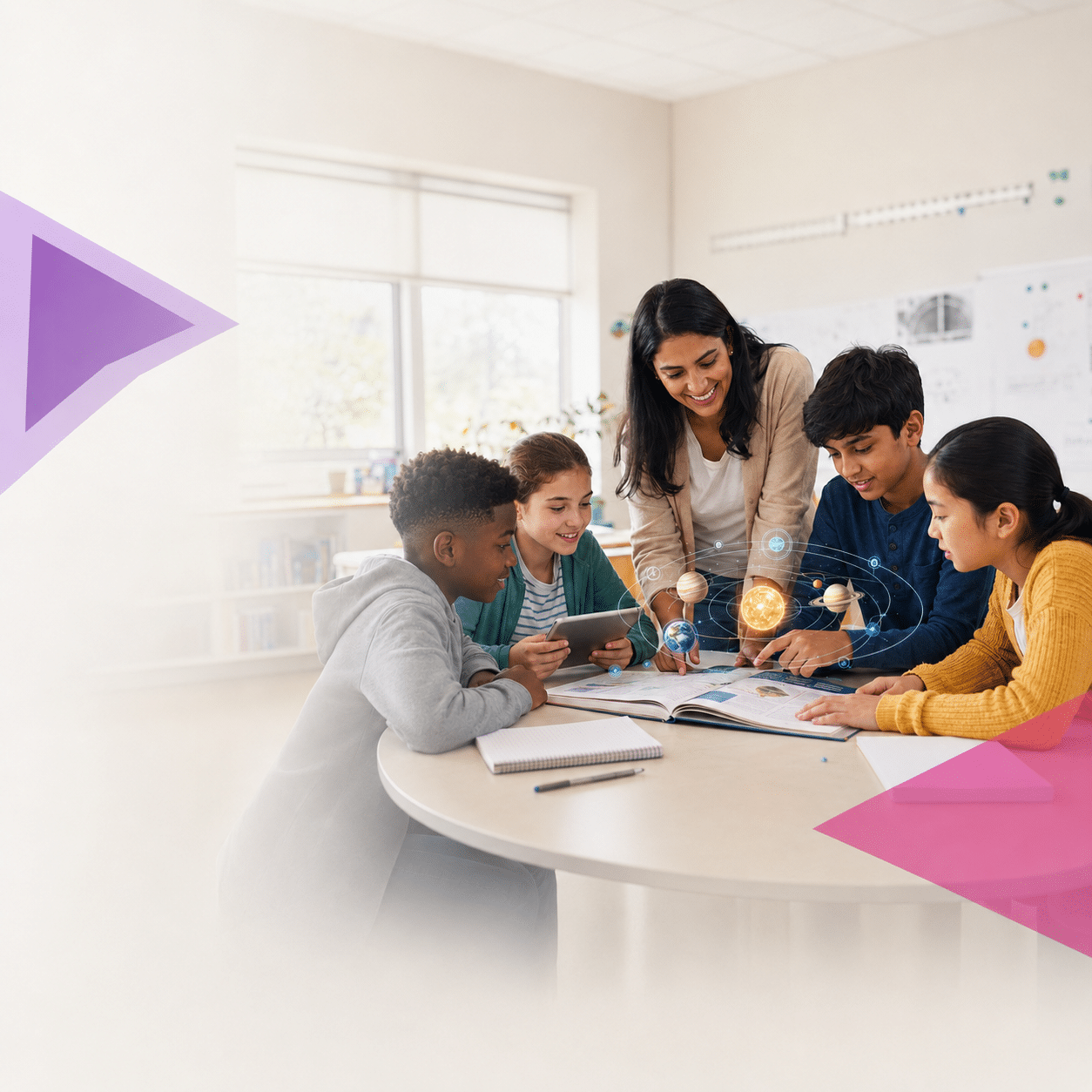
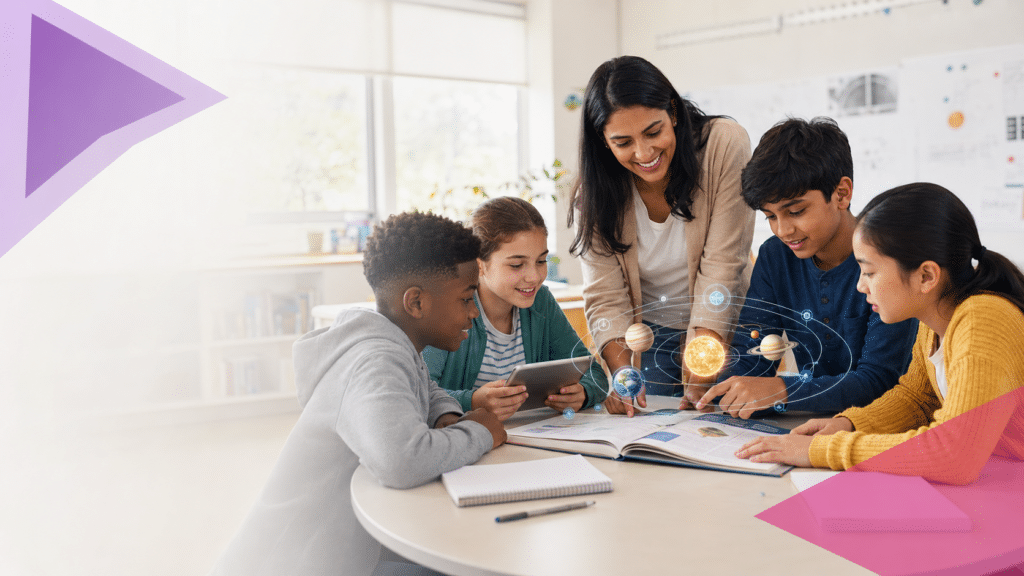
Augmented reality, or AR, places digital content such as labels, animations, three dimensional models, audio, and interactive tasks over the real world through a phone, tablet, or compatible device. A printed science page can reveal a rotating model of the solar system. A language card can trigger pronunciation and a contextual scene. A geometry activity can allow students to explore shapes from every angle.
Artificial intelligence in education, often called AI for learning, analyzes information and generates responses based on patterns, rules, and context. It can recommend practice, adapt the level of support, provide formative feedback, identify learning gaps, help teachers organize resources, and make content easier to access in different formats or languages.
Their roles are different but complementary. AR changes what students can experience. AI changes how the experience responds. The teacher gives both technologies educational direction, human judgment, and meaningful context.
Why AR and AI Work Better Together
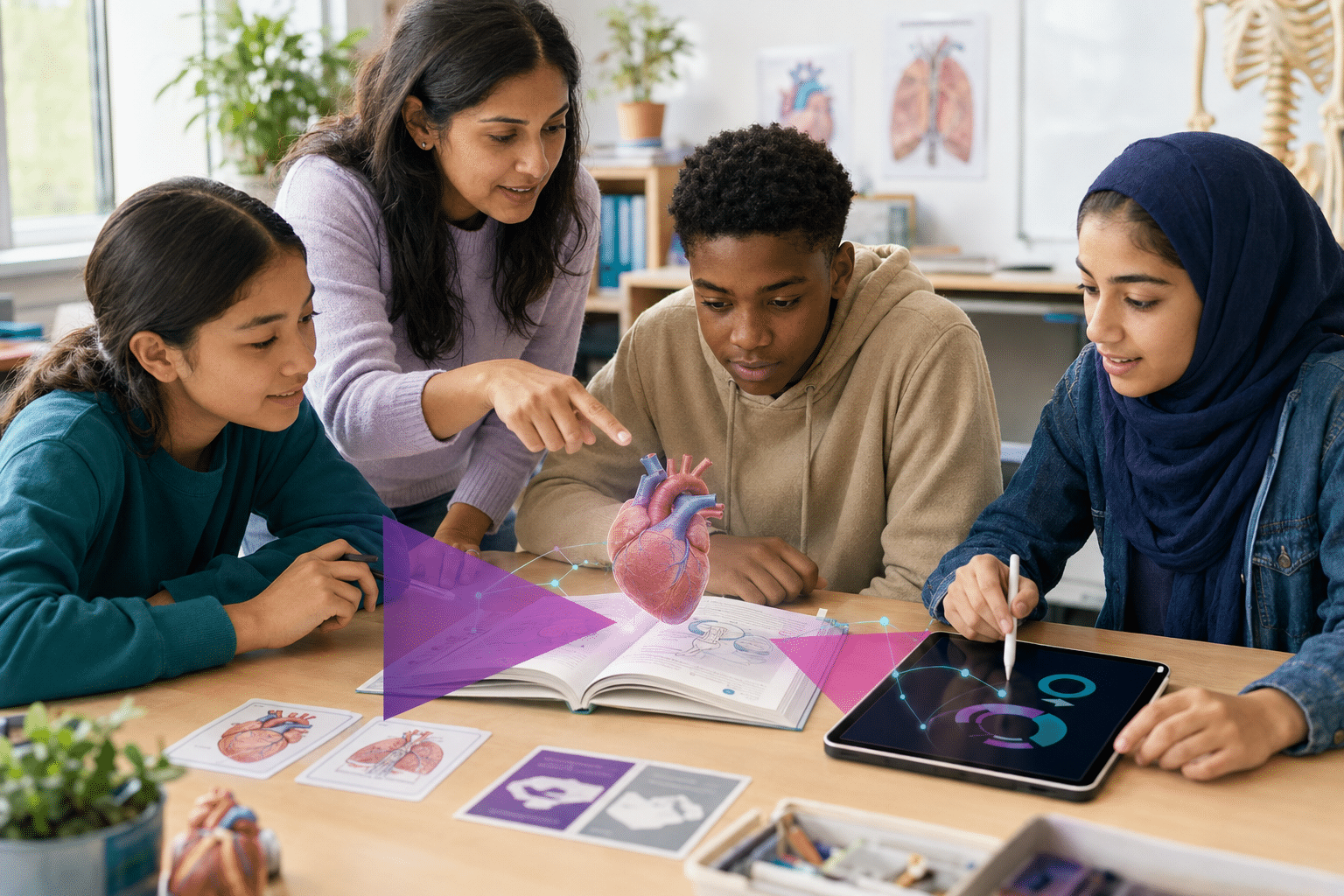
Consider a primary science lesson about the human heart. AR can place an interactive three dimensional heart above the page, allowing students to rotate it, isolate its parts, and follow the path of blood. AI can then adjust the questions based on each learner’s answers, offer a simpler explanation when needed, or provide an extension task for a student who is ready to go further.
The activity becomes even more valuable when it connects to a Learning Management System. Teachers can view participation, review responses, identify common misconceptions, and decide what the class needs next. The technology does not make the instructional decision. It gives the educator better evidence for making it.
This combined model supports immersive learning through a continuous cycle: experience, interaction, feedback, reflection, and improvement. It can connect print and digital resources while keeping the curriculum, the educator, and the learning outcome at the center.
Key Benefits of AR and AI in Education
1. More meaningful engagement
Engagement is valuable when it leads to attention, exploration, and understanding. AR can make invisible systems visible and allow students to interact with content in context. AI can keep the experience responsive by changing the sequence, prompt, or level of support according to student performance.
2. Personalized support at scale
Students do not all learn at the same speed or in the same way. AI can help provide additional examples, targeted practice, reading support, translation, or enrichment. AR can present the same concept through visual, spatial, auditory, and interactive formats. Together, they create more entry points into the lesson while the teacher maintains oversight. This is personalized learning used to expand opportunity, not isolate students from teachers or peers.
3. Faster formative feedback
Teachers need timely information about what students understand. AI supported activities can analyze responses and surface patterns during the learning process. AR can capture decisions made inside a task, such as the sequence a learner followed or the elements they selected. This can make assessment more immediate and useful for the next teaching decision.
4. Stronger real world connections
AR can place academic content inside authentic situations. Students can explore an ecosystem in the classroom, examine a machine safely, or connect a vocabulary item to an object in their environment. AI can add questions, feedback, and alternative paths based on the learner’s interaction. The result is learning that connects knowledge with application.
5. Better preparation for future skills
Technology should build human capability, not passive consumption. PMAA’s 21st Century Skills Framework emphasizes critical thinking, problem solving, digital fluency, creativity, collaboration, and self direction. Well designed AR and AI activities can develop these competencies when students are asked to investigate, compare, explain, create, and reflect.
6. More inclusive learning experiences
AI can support text simplification, speech, captions, translation, and differentiated guidance. AR can provide visual and spatial explanations that support learners who benefit from alternatives to text alone. These features must be planned for accessibility from the beginning, tested with users, and offered with non AR alternatives when devices, vision, mobility, or connectivity create barriers.
The Role of Teachers in an AI and AR Classroom
Teachers remain essential because learning is social, emotional, cultural, and deeply human. An algorithm can generate an explanation, but it cannot fully understand a student’s confidence, family context, motivation, or classroom relationships. AR can create an impressive experience, but it cannot decide whether that experience is appropriate for a specific group of learners.
The teacher defines the objective, chooses the activity, interprets the evidence, checks accuracy, supports discussion, and helps students transfer what they learned to a new situation. The most effective technology gives educators more time and better insight for these high value responsibilities.
This approach reflects the principle behind PMAA’s curriculum development: technology, assessment, inclusion, and practical skills should be integrated into the learning design from the start.
Responsible Use: From Innovation to Trust
UNESCO’s guidance on generative AI in education calls for a human centered approach that protects human agency and supports safe, equitable use. The OECD Digital Education Outlook 2026 also highlights a critical distinction: generative AI can support learning when guided by clear teaching principles, but completing a task with AI does not automatically produce real learning.
Schools therefore need clear standards before scaling AI or AR. These standards should address student data and consent, age appropriate use, content accuracy, bias, accessibility, intellectual property, security, device requirements, teacher review, and the amount of screen time involved.
Trust also depends on transparency. Students should know when AI is being used, what information it processes, and why a recommendation or response appears. Teachers should be able to review, correct, and override AI generated content. Families and school leaders should understand the purpose of the technology and how its impact will be evaluated.
Cultural Relevance Is a Design Requirement
An educational experience can be technically advanced and still fail if its language, visuals, examples, or assumptions do not fit the learners it serves. This risk grows when AI systems generate content from broad datasets or when AR assets are reused across regions without adaptation.
Effective implementation requires localization and cultural adaptation at every layer. That includes curriculum alignment, language quality, names and settings, visual representation, assessment expectations, teacher guidance, and local data protection requirements. Technology becomes more meaningful when learners recognize their world within it.
A Practical Roadmap for Schools
1. Begin with one learning problem
Select a concept students find difficult, a task that is hard to demonstrate safely, or an area where teachers need faster feedback. Define the learning outcome before choosing the technology.
2. Choose the role of each technology
Decide what AR should make visible or interactive, what AI should personalize or analyze, and what the teacher must review or lead. Every feature should have a clear educational purpose.
3. Design the complete learning journey
Plan what happens before, during, and after the digital interaction. Include preparation, discussion, reflection, assessment, and an alternative path for students who cannot use the technology.
4. Pilot with teachers and learners
Start with a small group. Observe whether the experience is understandable, accessible, accurate, and easy to manage. Gather feedback from students, teachers, school leaders, and technical teams before expanding.
5. Measure learning, not novelty
Track evidence connected to the original objective, such as conceptual understanding, retention, successful application, quality of student explanations, teacher time, participation, or correction effort. A memorable experience is useful only when it supports meaningful progress.
6. Build for sustainable adoption
Provide teacher training, technical support, content governance, update cycles, privacy procedures, and realistic device plans. Schools should be able to maintain the experience after the initial launch.
From Digital Features to a Connected Learning Ecosystem
The future of education is not a collection of disconnected tools. It is a connected ecosystem in which curriculum, content, teacher support, immersive experiences, assessment, and learning data work together.
In this ecosystem, a printed resource can open an AR activity. The activity can adapt with AI. The learning platform can record progress. The teacher can turn that evidence into feedback and a better next lesson. The student remains an active participant who explores, thinks, creates, and explains.
Schools and education partners can explore PMAA’s digital samples to see how curriculum resources can connect across subjects and levels.
The Future Is Augmented, Intelligent, and Human
AR and AI can expand what is possible in education, but their value will depend on the choices made around them. Used without a clear purpose, they can add complexity, distraction, and risk. Designed around strong pedagogy, inclusion, cultural relevance, and teacher agency, they can help make learning more visible, responsive, and meaningful.
The goal is not to automate education. The goal is to strengthen the human work of teaching and learning with tools that respond to real needs.
Ready to explore a future ready curriculum, digital learning solution, or localized education partnership? Contact the PMAA sales team to discuss the right path for your school, institution, or market.
Frequently Asked Questions
What is augmented reality in education?
Augmented reality in education places interactive digital content over the real world through a phone, tablet, or compatible device. It can help learners explore three dimensional models, labels, animations, audio, and activities within a physical context.
How is artificial intelligence used in education?
AI can support personalized practice, formative feedback, learning recommendations, accessibility, translation, resource organization, and analysis of student responses. It should be guided by educators and clear learning objectives.
How can AR and AI work together in the classroom?
AR can create an interactive experience, while AI adjusts support, questions, or feedback based on the learner’s actions. A learning management system can connect the experience to teacher review and progress tracking.
Can AR and AI replace teachers?
No. Teachers provide judgment, relationships, cultural understanding, motivation, safeguarding, and instructional leadership. The best use of AR and AI strengthens these responsibilities rather than replacing them.
What should schools consider before adopting AR and AI?
Schools should begin with a clear learning need and review privacy, accuracy, bias, accessibility, age appropriateness, teacher training, curriculum alignment, device access, technical support, and measurable learning outcomes.
Reference Sources
UNESCO: Guidance for generative AI in education and research
OECD Digital Education Outlook 2026
UNICEF: Augmented Reality and Virtual Reality for Good

About the Author
Samer Tallauze
Lead Digital Product | Preiss Murphy
Building purposeful digital learning experiences at the intersection of AI, instructional design, and educational technology.