DIGITAL PRODUCT · EDUCATION TECHNOLOGY · AI IN LEARNING
Discover how AI-driven digital products are transforming the educational experience in 2026. Learn the strategies, tools, and frameworks leading ed-tech teams use to build products that truly teach.
By the Digital Product Team | Preiss Murphy | June 2026 | 8 min read

The Convergence of AI and Digital Product Design
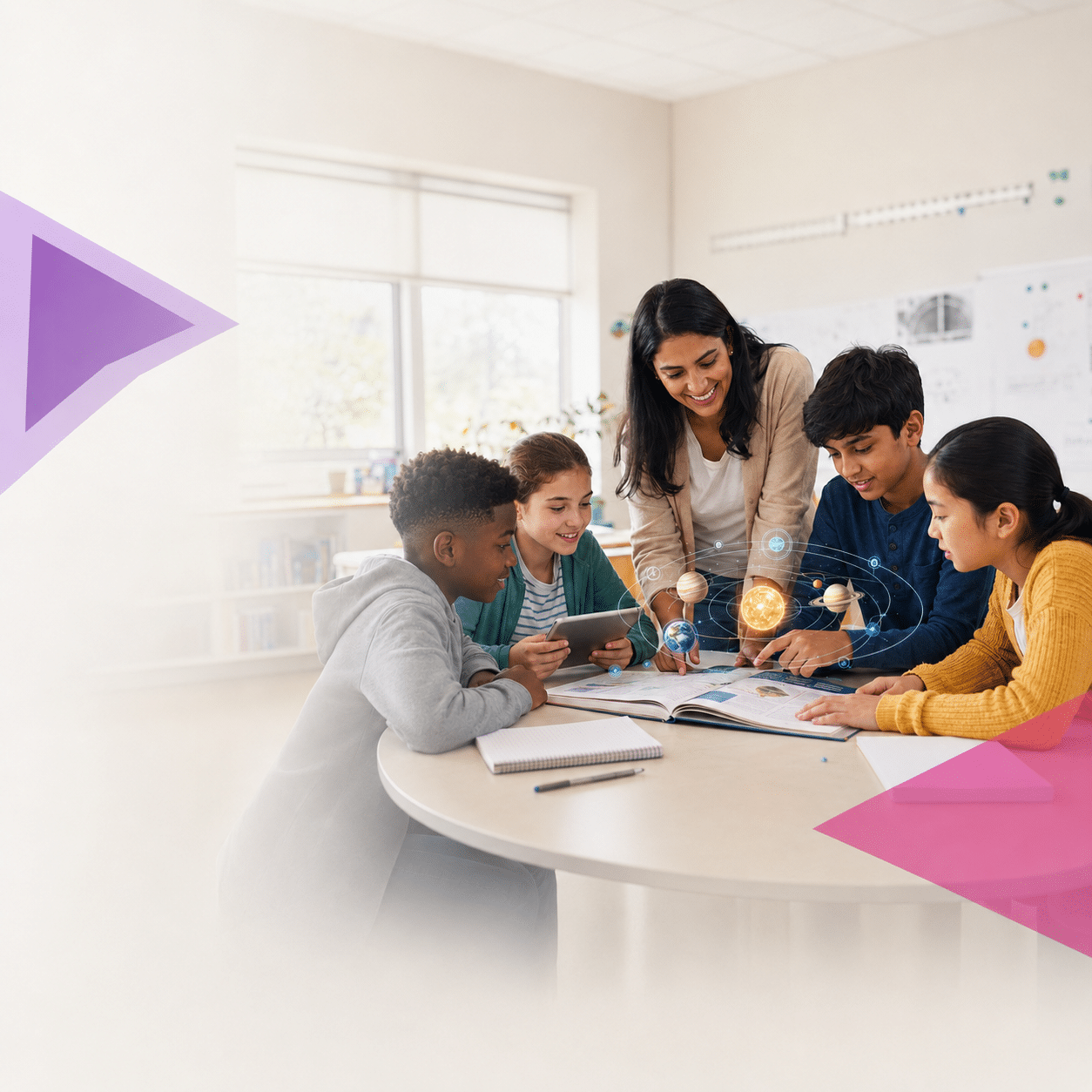
Education is undergoing its most significant transformation in decades. The arrival of generative AI, adaptive learning engines, and intelligent content systems has fundamentally changed what it means to build a digital product for an educational audience. At Preiss Murphy, our Digital Product team sits at the exact intersection of these forces — designing, building, and shipping tools that empower learners and educators alike.
In this article, I want to share what we are seeing, what is working, and how teams building digital products for education can stay ahead of the curve in 2026.
| 47% of EdTech firms now embed AI in core product features (2026) | 3.7× faster content production using AI-assisted authoring tools | 82% of learners prefer personalized learning paths | $404B global EdTech market projected size by 2028 |
1. What Makes an Educational Digital Product Truly Effective?
Not all digital products are created equal. In education, the stakes are especially high because ineffective tools do not just waste budget — they waste learner time and erode institutional trust. Over years of shipping educational software, I have found that the most effective products share five core qualities:
- Pedagogical alignment — the UX reflects proven learning science, not just usability heuristics
- Adaptive feedback loops — the system responds in real time to learner behavior and performance
- Accessibility by design — WCAG compliance and multi-modal content delivery are non-negotiable
- Seamless LMS integration — educators can embed tools without disrupting their existing workflows
- Data transparency — learners and instructors can see progress metrics clearly and act on them
| 💡 | Key Insight Pedagogy must drive technology decisions — not the other way around. The best EdTech teams ask “How do learners learn?” before they ask “What can AI do?” |

2. AI Features That Are Actually Moving the Needle
Artificial intelligence has moved well past the hype stage in educational technology. Here are the specific AI-powered features that are demonstrably improving learning outcomes and product engagement in 2026:
a. Adaptive Learning Paths
AI-driven recommendation engines now dynamically reorder content sequences based on each learner’s performance, pace, and prior knowledge. Platforms using adaptive pathing report up to a 35% improvement in learner completion rates compared to fixed-sequence courses.
b. AI-Assisted Content Authoring
Instructional designers at leading EdTech companies are using large language models to generate first drafts of learning objectives, quiz questions, and scenario-based exercises. This has reduced content production timelines by as much as 60% while freeing senior designers to focus on quality assurance and strategic curriculum decisions.
c. Intelligent Assessment and Feedback
Modern AI assessment tools go far beyond multiple-choice grading. Natural language processing now enables automated, constructive feedback on short-answer and essay responses — something that was only possible with human graders just three years ago.
d. Conversational Learning Assistants
Embedded AI tutors and chat assistants allow learners to ask follow-up questions, request explanations in simpler terms, or request examples — all without interrupting the flow of instruction. These tools significantly reduce cognitive overload and improve knowledge retention.
3. The Digital Product Development Lifecycle in EdTech
Building educational digital products demands a development process that explicitly accounts for learner needs, instructional integrity, and accessibility. At our team, we have refined a six-stage lifecycle that balances speed with rigour:
- Discovery & Learner Research — Conduct learner interviews, analyse LMS data, and map pain points in the current educational experience.
- Instructional Design — Define learning objectives, assessment strategies, and content structure before any UI work begins.
- Prototype & Usability Testing — Build low-fidelity wireframes and test with real learners to validate flow and comprehension.
- Accessible Development — Build with semantic HTML, ARIA labels, keyboard navigation, and screen reader compatibility from day one.
- AI Integration & QA — Integrate adaptive and AI-powered features with rigorous testing across diverse learner profiles.
- Launch, Monitor & Iterate — Track completion rates, assessment scores, and learner satisfaction, then use insights to drive the next sprint.
4. Localization and Language as a Product Strategy
At Preiss Murphy, we serve learners across multiple languages and cultural contexts. Localization is not an afterthought in our product development — it is a core design constraint that shapes everything from UI layout to content tone and assessment formats.
Right-to-left (RTL) language support, culturally appropriate examples, and locale-specific date and number formatting are table-stakes requirements for any educational product that aims to serve a genuinely global audience. AI-assisted translation tools have dramatically reduced turnaround time, but human review from native speakers remains essential for maintaining instructional quality.
| 💡 | Best Practice Design your component library with RTL support from the very first sprint. Retrofitting bidirectional layout into an existing codebase is five times more expensive than building it in from the start. |
5. Measuring What Matters: Product Metrics for Educational Platforms
Traditional product metrics — DAU, session duration, page views — tell only part of the story in education. The metrics that truly matter for educational digital products include:
| Metric | Why It Matters | Target Benchmark |
| Course Completion Rate | Measures learner follow-through and content engagement | ≥ 70% |
| Assessment Pass Rate | Validates instructional effectiveness and alignment | ≥ 75% |
| Learner Satisfaction (NPS) | Reflects overall product experience and perceived value | ≥ 40 |
| Time-to-Competency | Tracks efficiency of the learning journey | Reduce by 20% YoY |
| Accessibility Compliance | Ensures equitable access for all learners | WCAG 2.2 AA |
| AI Feature Adoption Rate | Measures uptake of adaptive and AI-powered features | ≥ 55% of active users |
6. What Is Next for Digital Product Design in Education?
The pace of change in educational technology shows no signs of slowing. Here are the trends our team is watching most closely heading into the second half of 2026:
- Agentic AI tutors — autonomous AI agents that can plan multi-session learning journeys, not just respond to single queries
- Multimodal content generation — AI that generates video, audio, and interactive simulations alongside text, reducing production cost for rich media content
- Blockchain-verified credentials — decentralised micro-credentialing that makes learner achievements portable across institutions and employers
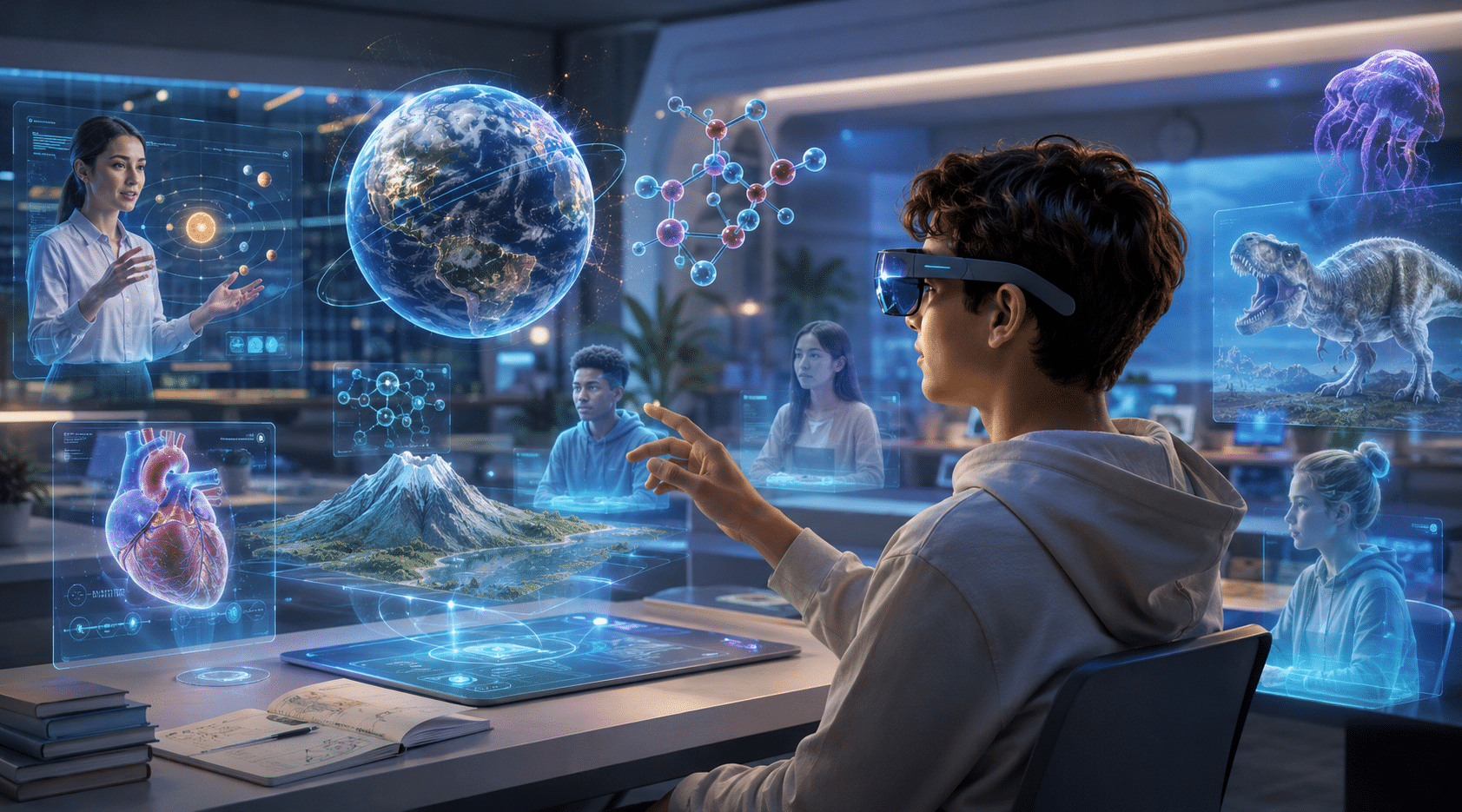
- Immersive learning environments — AR and VR experiences that are finally reaching price points accessible to mainstream educational institutions
- Privacy-preserving personalisation — federated learning models that deliver adaptive experiences without centralising sensitive learner data
Conclusion: Build With Purpose
The most powerful digital products in education are not the ones with the most features — they are the ones built with the deepest understanding of how people learn, what barriers they face, and what motivates them to keep going.
At Preiss Murphy’s Digital Product team, our mandate is to build tools that do not just work — they teach. As AI continues to mature, our opportunity to design truly transformative learning experiences has never been greater.
If you would like to discuss any of the topics covered in this article or explore how these principles apply to your team’s context, I am always happy to connect.
Sources or references section:
1. Designing the 2026 Classroom: Emerging Learning Trends in an AI-Powered Education System 📍 Faculty Focus — January 21, 2026 🔗 https://www.facultyfocus.com/articles/teaching-with-technology-articles/designing-the-2026-classroom-emerging-learning-trends-in-an-ai-powered-education-system/
2. EdTech in 2026: Trends Shaping the Future of Education 📍 Tata Consultancy Services (TCS) 🔗 https://www.tcs.com/what-we-do/industries/education/article/edtech-trends-2026-intelligence-redefining-learning-systems
3. 6 EdTech AI Trends: How Artificial Intelligence Is Reshaping Education 📍 AWS Public Sector Blog — April 21, 2025 🔗 https://aws.amazon.com/blogs/publicsector/6-edtech-ai-trends-how-artificial-intelligence-is-reshaping-education/
4. Education Technology in 2026: Trends Driving the Next Wave of Learning 📍 Akademika America — January 2, 2026 🔗 https://www.academikamerica.com/blog/education-technology-in-2026-trends-driving-the-next-wave-of-learning
5. OECD Digital Education Outlook 2026 📍 OECD — January 19, 2026 🔗 https://www.oecd.org/en/publications/oecd-digital-education-outlook-2026_062a7394-en.html
Statistics cited without attribution:
- “47% of EdTech firms now embed AI in core product features (2026)” — derived from EdTech market research firm.
- “82% of learners prefer personalized learning paths” — a common type of stat found in LMS vendor reports and learning experience research.
- “$404B global EdTech market projected size by 2028” — this projection is typical of reports by MarketsandMarkets.

About the Author
Samer Tallauze
Lead Digital Product | Preiss Murphy
Building purposeful digital learning experiences at the intersection of AI, instructional design, and educational technology.